We are proud to be one of the first commercial Dragon Fruit Farms in South Africa.
Specializing in dragon fruit, today we growing over 200 varieties which we ship all over the world.
Proudly 100% organic, we produce fresh fruit for the local market and produce value added products available online.
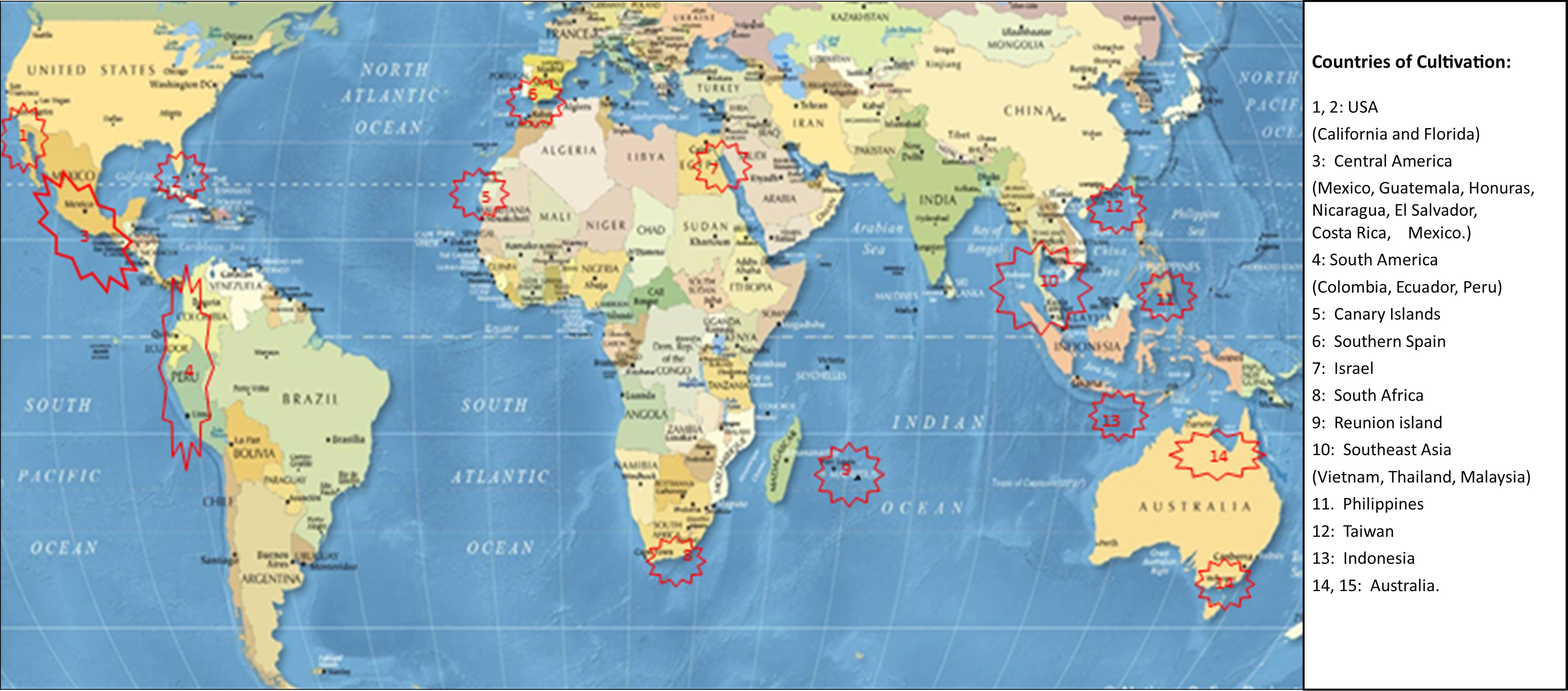
Dragon fruit is the fruit of the species Hylocereus undatus and by extension of the other Hylocereus. Hylocereus undatus is a semi-epiphytic or lithophytic cactu, whose exact origin is unknown. It is located in dry areas of Central America (Southern Mexico, Salvador, Guatemala, Costa Rica).
The genus Hylocereus is a genus of semi-epiphytic cacti, climbing and growing in forests. (Hylocereus means forest candle) It is believed that the name came from the tortuous shape of the stems and the presence of scales on the fruit, which could evoke the appearance of a Dragon
The fruits of Hylocereus are also called Pitahaya or Pitaya (the taino word meaning “scaly fruit”, taken up by the Spanish speaking people.) The Tainos are an Amerindian ethnic group that were occupying the Greater Antilles when Europeans arrived in the 18th century.
The presence of the two names “Dragon fruit” and “Pitahaya” shows that Dragon fruit is a multicultural fruit (the word “Pitahaya” is Amerindian then the European or American phrase “fruit du Dragon” or : “Dragon fruit” comes from Vietnamese “Thanh Long”. It is also called thang loy in Thailand, pitahaya if hailing from Israel, paniniokapunahou in Hawaii, Huo long guo in China, Maasik-metskaktus in Estonian; Belle de nuit in France; Drachenfruicht in Germany, Buah naga in Indonesia; Junco in Mexico; Cato-barse in Portuguese; Chaco in Spain; Distelbirn in Sweden and Thanh long in Vietnam. It is also known as Strawberry pear and night blooming cereus. The presence of this many names indicates just how much this fruit has become a multicultural fruit.
Despite this contemporary global spread, dragon fruit is native to Mexico (south and central), Central America and the northern part of South America as far as Peru, Guyana and the Caribbean islands, and was introduced to Asia via Vietnam by the French in the early 1800s. Vietnam is Asia’s top producer, primarily growing fruit with bright pink skin and white flesh variety known as “Vietnamese White”.
Dragon fruit continues to gain popularity, which is spurring expansion in commercial production in temperate climates across the globe . Although Hylocereus undatus was exported to Asia and in particular to Vietnam by the French people, it was returned to California through the Vietnamese community in the 19th century.
Nicaragua and Ecuador both grow significant amounts of a pink-skinned dragon fruit species with deep to light pink flesh. Ecuador also grows a yellow skinned variety with white flesh, which is also cultivated in Colombia. Mexico, Costa Rica, El Salvador, and Guatemala are also seasonal producers. Other countries that grow dragon fruit for domestic consumption and export include Australia, Israel and South Africa.
Dragon fruit is now grown around the world
Growing well in tropical and sub-tropical regions, dragon fruit is a terrestrial, climbing cacti. This spiny vine can have long, fleshy, triangular stem segments that need to be pruned regularly as this is a vigorous grower. Commercial vineyards need strong trellising system to support the plant’s vertical growth.
In a perfect tropical climate, it flowers within 18 months during the summer months. Depending on the variety, fruit may ripen within 30 – 45 days.
As a nocturnal bloomer, the white fragrant flowers open at about 8pm and start to close at daybreak. If it is an overcast and cool day, flowers may remain open longer into the day. Nocturnal insects, moths and bats can both pollinate the flowers, as do bees in the early morning, but hand pollination is sometimes necessary due to some variety’s which are self sterile.
Plants prefer a moist, warm climate and rich soil, and are desirable for their drought tolerance. Uneven soil moisture, can lead to less flowering and splitting fruit, while excessive rain can result in flower drop, fruit rot as well as splitting stems. Plants prefer full day sun, although high temperatures can cause sunburn damage stems if combined with low humidity or inadequate moisture in the soil. Insufficient sunlight can lead to lower quality fruit and reduced production.
Plants are sensitive to cold, but can recover from brief exposure to freezing temperatures. While most dragon fruit is harvested from spring to late autumn, the season can be extended by supplemental light from incandescent bulbs in some regions where temperatures are above 18 degrees.
As a relatively recent fruit to commercial production in South Africa, research into pests and diseases is ongoing. Possibly the most common problem is soft rot which can affect stems, in Mexico it has been linked to a calcium deficiency.
Thrips can cause serious damage to the outside of the fruit. The tiny bugs mark fruit with a stippled pattern that is primarily an aesthetic issue.
Aphids, ants, scale, and mealybugs can affect production when not controlled, while birds, and snails cause damage and influence harvest production. Producers in Australia use netting to protect ripening fruit from birds. We use chickens and ducks for snail and insect control.
Other diseases and pathogens include fungus during extended wet or damp weather, anthracnose, brown spot, canker, and fruit rot.
Dragon fruit can be easily damaged by chilling injury, leading to wilting, browning, and softening if exposed to temperatures lower than 8 degrees if it is not protected by packaging.
To optimise shelf life, it is important to move dragon fruit to a cool dry area once picked. Sorting and packaging should be done within 12 hours in temperatures below 18 degrees To prevent shrivelling fruit should be stored in protective containers.
Once picked, dragon fruit does not continue ripening so it is imperative that fruit it picked at fully ripened stage. Postharvest life is up to 4 weeks when properly cooled and stored. At room temperature, fruit will last 4 to 5 days. Optimal storage temperature varies by variety, with red dragon fruit favouring 10 degrees Celsius and yellow dragon fruit (Megalanthus) preferring 7/8 degrees C with optimum relative humidity of 85 to 90%.
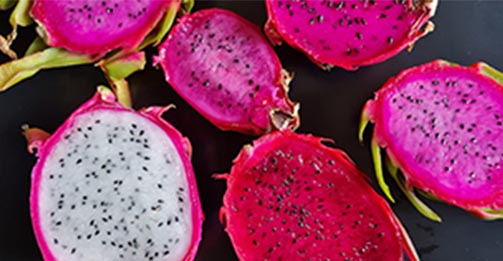
There is no need to slay a dragon to get to the fruit named after the fiery beast, passionate farmer Jackye Riddle, who has also created several dragon fruit varieties of her own, says
Read More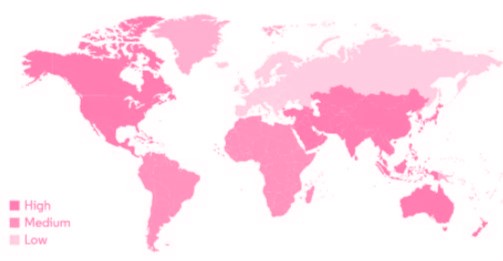
A report on the Dragon Fruit Market segmented by Geography world wide.
Read More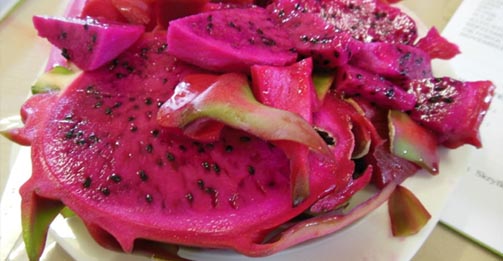
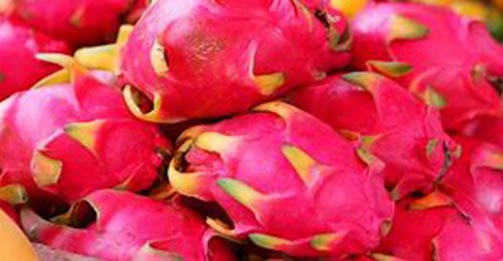
Dragon fruit are some of the most interesting foods on Earth, growing on massive exotic cacti from long tentacles which drape down when bearing fruit.
Read More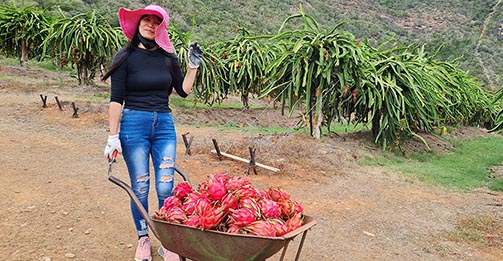
Foraging is all the fashion proper now… however South Africans have been residing off the land since prehistoric occasions.
Read More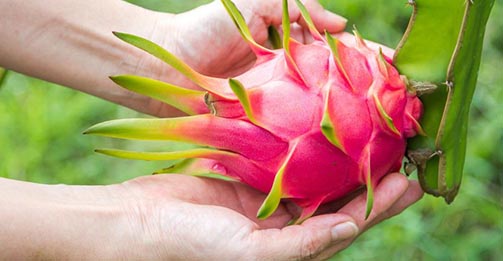
Die rit na Jackye Riddle se plaas net buite Patensie is byna net so besonders as die eksotiese draakvrugte wat daar gekweek word.
Read More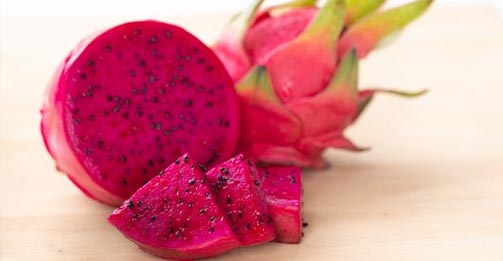
Die bye entrepreneur, me. Jackye Riddle het reeds tien jaar ondervinding met die aanplant van draakvrug in Suid Afrikaanse toestande.
Read More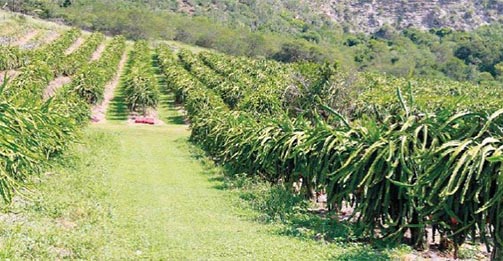
Na meer as tien jaar in die draakvrugbedryf het me. Jackye Riddle al ‘n paar lesse oor die eksotiese draagvrug geleer.
Read More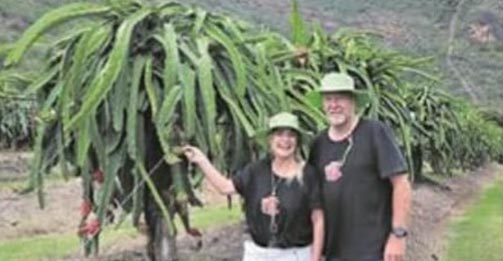
Patensie-boer Jackye Riddle verduidelik die vele gebruike van die draakvrug, asook ander interessante feite oor die kaktus-rankplant met Meksikaanse oorsprong, wat hom nou tuis kom vind in Suid-Afrika
Read More